Why Most Social Media Strategies Fail
Let's be honest: most businesses treat social media as an afterthought. They post sporadically, share generic content, and wonder why their follower count stays flat and engagement is nonexistent.
The problem isn't social media — it's the lack of strategy. A platform with 4.9 billion users worldwide isn't going to fail you. But posting without purpose will.
The Foundation: Know Your Audience Deeply
Before you create a single post, you need to answer three fundamental questions:
- Who exactly is your ideal customer? — Age, location, profession, income level, interests, pain points.
- Where do they spend time online? — Instagram for visual brands, LinkedIn for B2B, YouTube for education, TikTok for younger demographics.
- What problems can you solve for them? — Your content should address real challenges your audience faces.
Create 2-3 detailed buyer personas. Give them names, backgrounds, and specific needs. Every piece of content you create should speak directly to one of these personas.
Choosing the Right Platforms
You don't need to be on every platform. In fact, spreading yourself thin across six platforms is worse than dominating two. Here's a quick guide:
- Instagram — Best for lifestyle brands, visual products, restaurants, fashion, real estate, and personal brands. Focus on Reels and Stories.
- LinkedIn — Essential for B2B companies, professional services, and thought leadership. Long-form posts and articles perform well.
- YouTube — The second-largest search engine. Perfect for tutorials, product demos, and educational content with long shelf life.
- Facebook — Still strong for local businesses, community groups, and paid advertising targeting older demographics.
Pick 2-3 platforms where your audience is most active and commit to them fully.
The Content Pillars Framework
Random posting is the enemy of growth. Instead, organize your content around 3-5 content pillars — recurring themes that align with your brand and audience interests.
For example, a digital marketing agency might use these pillars:
- Educational — SEO tips, marketing tutorials, industry insights
- Behind the scenes — Team culture, project showcases, day-in-the-life content
- Social proof — Client testimonials, case studies, before-and-after results
- Industry trends — Commentary on marketing news, platform updates, emerging technologies
- Engagement — Polls, questions, challenges, user-generated content
Each pillar should represent roughly 20-30% of your total content output, ensuring variety while maintaining consistency.
The Posting Schedule That Works
Consistency beats frequency. It's better to post 3 high-quality pieces per week than 7 mediocre ones. Here's a sustainable starting schedule:
- Instagram: 3-4 Reels per week, daily Stories
- LinkedIn: 3-5 posts per week (mix of text, carousels, and articles)
- YouTube: 1-2 videos per week
- Facebook: 3-4 posts per week
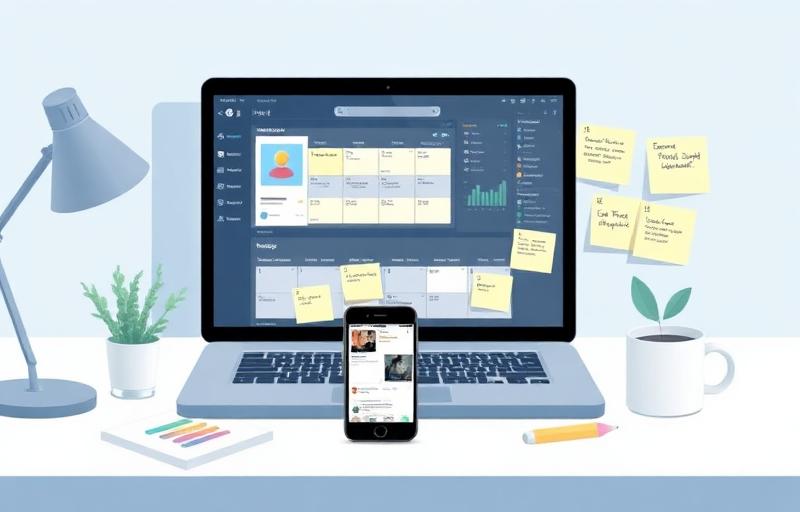
Use a content calendar to plan at least two weeks ahead. Batch create your content on specific days to maintain efficiency.
Engagement Is a Two-Way Street
The "social" in social media matters. Algorithms reward accounts that generate conversations, not just broadcast messages.
- Reply to every comment within the first hour of posting
- Engage with your followers' content — leave thoughtful comments on their posts
- Use interactive features like polls, questions, and quizzes in Stories
- Respond to DMs promptly — this is where conversations turn into conversions
Measuring What Matters
Stop obsessing over vanity metrics like follower count. Focus on metrics that indicate real business impact:
- Engagement rate — (Likes + Comments + Shares + Saves) ÷ Followers × 100. Aim for 3-6% on Instagram.
- Click-through rate — How many people click your links, bio, or CTAs.
- Conversion rate — How many social visitors take a desired action (sign up, purchase, book a call).
- Audience growth rate — The speed at which you're gaining relevant followers.
Review your analytics weekly and adjust your strategy based on what's working.
"Social media success isn't about going viral once. It's about showing up consistently with value until your audience can't ignore you."
The 30-Day Quick Start Plan
- Week 1: Define your audience, choose platforms, establish content pillars
- Week 2: Create your content calendar, batch-produce your first 2 weeks of content
- Week 3: Start posting consistently, engage with 10-20 accounts daily in your niche
- Week 4: Review analytics, double down on what's working, cut what isn't
Social media marketing is a marathon, not a sprint. Give your strategy at least 90 days before evaluating its effectiveness.